
The Best Time to Visit Cape Town — A Photographer’s Seasonal Guide
Updated 27 October 2026
The best time to visit Cape Town depends on what you want from the trip. For warm days and long evenings, come from December to February. For the best light, fewer crowds and calmer winds — and for photographs — come from March to May. For whales and wildflowers, aim for August to October. Here is how each season works, from someone who has photographed families in Cape Town for 12+ years.
The Seasons at a Glance
| Season | Typical temperatures | Best for | Watch out for |
|---|---|---|---|
| Summer Dec–Feb | 20–30°C | Beaches, long evenings, festive season | South-easter wind, crowds, higher prices |
| Autumn Mar–May | 15–25°C | Golden light, hiking, winelands, photographs | Shorter days from May |
| Winter Jun–Aug | 7–18°C | Soft light, cosy cafés, whales from June, green landscapes | Rain and cold fronts |
| Spring Sep–Nov | 10–22°C | Wildflowers, whales, mild weather | Changeable days early in the season |
Summer (December to February)

Summer is Cape Town’s busiest season, and for good reason. Temperatures typically range from 20°C to 30°C, days are long, and the sun does not set until after 8 pm around midsummer. It is the time for Clifton and Camps Bay, long beach days and festive-season events — the Cape Minstrel Carnival, for example, parades through the city around 2 January.
The trade-off is the Cape Doctor, the strong south-easter that can blow hard along the coast, especially at the beach. It is still very workable: early mornings are usually calm and golden, and I plan beach sessions around the forecast. December and January also bring the biggest crowds, so book accommodation well in advance.
Autumn (March to May)

If I could choose one season, it would be autumn. Temperatures sit between 15°C and 25°C, the summer wind has dropped, and the late-afternoon light turns golden. Crowds thin out, and it is an ideal time for hiking and exploring the Cape Winelands. For families visiting specifically for a photo shoot, this is my top recommendation.
Winter (June to August)
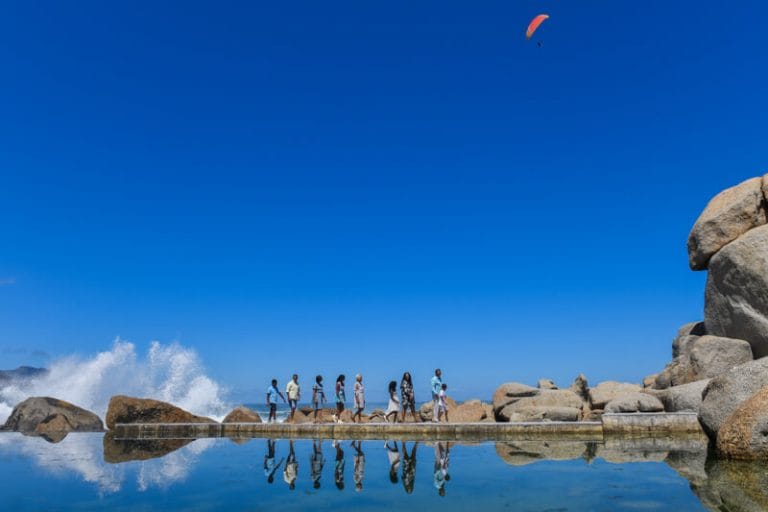
Winter is Cape Town’s rainy season. Temperatures range from 7°C to 18°C, and the landscape turns green. There is plenty to enjoy: cosy cafés, art exhibitions and cultural events, and from June the first southern right whales arrive along the coast. Overcast skies can create beautiful, soft, even light, but bring layers and expect some rain days. It is not ideal if you are planning beach sessions.
Spring (September to November)

Spring is a visual treat. Temperatures climb from about 10°C to 22°C, the city bursts with colour, and the light is building after winter. Whale-watching peaks in September and October, and the wildflowers on the West Coast, including the West Coast National Park, bloom in late winter and early spring, from about August to September. It is also quieter than high summer — a close second to autumn for photography.
Which Month for Which Trip?
- Beach holiday: December to February, with an eye on the wind.
- Photography and fewer crowds: March to May.
- Whales: June to November, peaking in September and October.
- Wildflowers: August and September.
- Winelands and hiking: March to May, or September to November.
- Budget travel: winter, outside the school holidays.
Visiting Cape Town for a Family Shoot?
Many of the families I photograph are visiting from overseas and want one set of images to remember the trip. If that is you, my page on planning a Cape Town family shoot from abroad covers the practical details — currency, getting around, SIM cards and how the shoot works. For locations, see family photography locations in Cape Town, and for the full picture, my complete family photography guide.
Coming to Cape Town? Tell me your travel dates and I will tell you the best days and locations for a family shoot. View packages and pricing.
Get in touch: +27 82 556 7427 · info@riekertcloete.com
Frequently Asked Questions
What is the best month to visit Cape Town?
For the best combination of weather, light and fewer crowds, March and April are hard to beat. Autumn temperatures sit between 15°C and 25°C, the summer wind has dropped, the late-afternoon light turns golden and the crowds thin out. If you want classic summer beach weather, choose January or February, when temperatures typically range from 20°C to 30°C and the sun does not set until after 8 pm around midsummer. For whales and wildflowers, aim for August to October. Riekert Cloete Photography has photographed families in Cape Town for 12+ years, and if I could choose one season for a family shoot it would be autumn. Tell me when you are visiting and I will suggest the best window.
Is Cape Town too windy in summer?
The south-easter, known locally as the Cape Doctor, can be strong in summer, especially at beaches. It is still very workable: early mornings are usually calm and golden, sheltered spots are often available, and I plan beach sessions around the forecast. Check the forecast and stay flexible. December and January also bring the biggest crowds, so book accommodation well in advance. If wind is a worry for your trip, autumn is the alternative, because from March to May the summer wind has dropped. Riekert Cloete Photography watches the forecast closely before every family shoot, so if the wind is up on the day we can move to a more sheltered spot or an earlier time.
When can I see whales in Cape Town?
Southern right whales arrive along the coast from about June, and whale-watching peaks in September and October, with whales possible from June to November. Autumn is not the main whale season. If whales are the reason for your visit, spring is the best time, and it combines well with the wildflowers on the West Coast, including the West Coast National Park, which bloom in late winter and early spring, from about August to September. Spring is also quieter than high summer and a close second to autumn for photography, with temperatures climbing from about 10°C to 22°C, though early-season days can be changeable. Riekert Cloete Photography can plan a family shoot around your trip.
Is winter a bad time to visit?
Not at all. There are rain days and cold fronts, but also green landscapes, soft light and lower prices. Pack layers and plan some indoor activities. Winter is Cape Town’s rainy season, with temperatures from 7°C to 18°C, and there is plenty to enjoy: cosy cafés, art exhibitions and cultural events, and from June the first southern right whales arrive along the coast. Overcast skies can create beautiful, soft, even light for photographs, although winter is not ideal if you are planning beach sessions. Riekert Cloete Photography can suggest locations that suit a winter session if you are visiting between June and August, so tell me your dates.
What is the best time for a family photo shoot in Cape Town?
March to May for the best light and calm weather, with September to November a close second. Summer works well with early-morning or evening sessions. In autumn the summer wind has dropped and the late-afternoon light turns golden, which is why it is my top recommendation for families visiting specifically for a photo shoot. In spring the city bursts with colour and the light is building after winter. In summer the early morning is usually calm and golden. Riekert Cloete Photography plans each session around the forecast and the light. See my visiting South Africa page for more, and tell me when you will be in Cape Town.
Ready to plan your Cape Town family shoot? Send me your dates and I will help you choose the right day and place.
Riekert Cloete · Cape Town Family Photographer
+27 82 556 7427 · info@riekertcloete.com · WhatsApp
100+ Google reviews · 12+ years in Cape Town
Family photography · Packages & pricing · Portfolio